

3D Printing for Rapid Prototyping: How Midlands Manufacturers Save Time
3D Printing for Rapid Prototyping: How Midlands Manufacturers Save Time
The East Midlands has one of the strongest manufacturing economies in the UK. Leicester and Leicestershire alone contribute over £19 billion to the regional economy, with manufacturing playing a central role. The area is home to hundreds of engineering companies — from precision CNC machinists and contract manufacturers to product design consultancies and OEMs across automotive, aerospace, medical, and industrial sectors.
For these manufacturers, getting a product to market faster isn’t a nice-to-have — it’s a competitive necessity. That’s where rapid prototyping with professional 3D printing comes in. Instead of waiting weeks for machined prototypes or soft tooling, design engineers across the Midlands are turning around functional prototypes in days, testing in real materials, and iterating faster than ever.
This guide explains how rapid prototyping with 3D printing works at the professional level, why it matters for Midlands manufacturers specifically, and how to get the most out of it.
What Is Rapid Prototyping with 3D Printing?
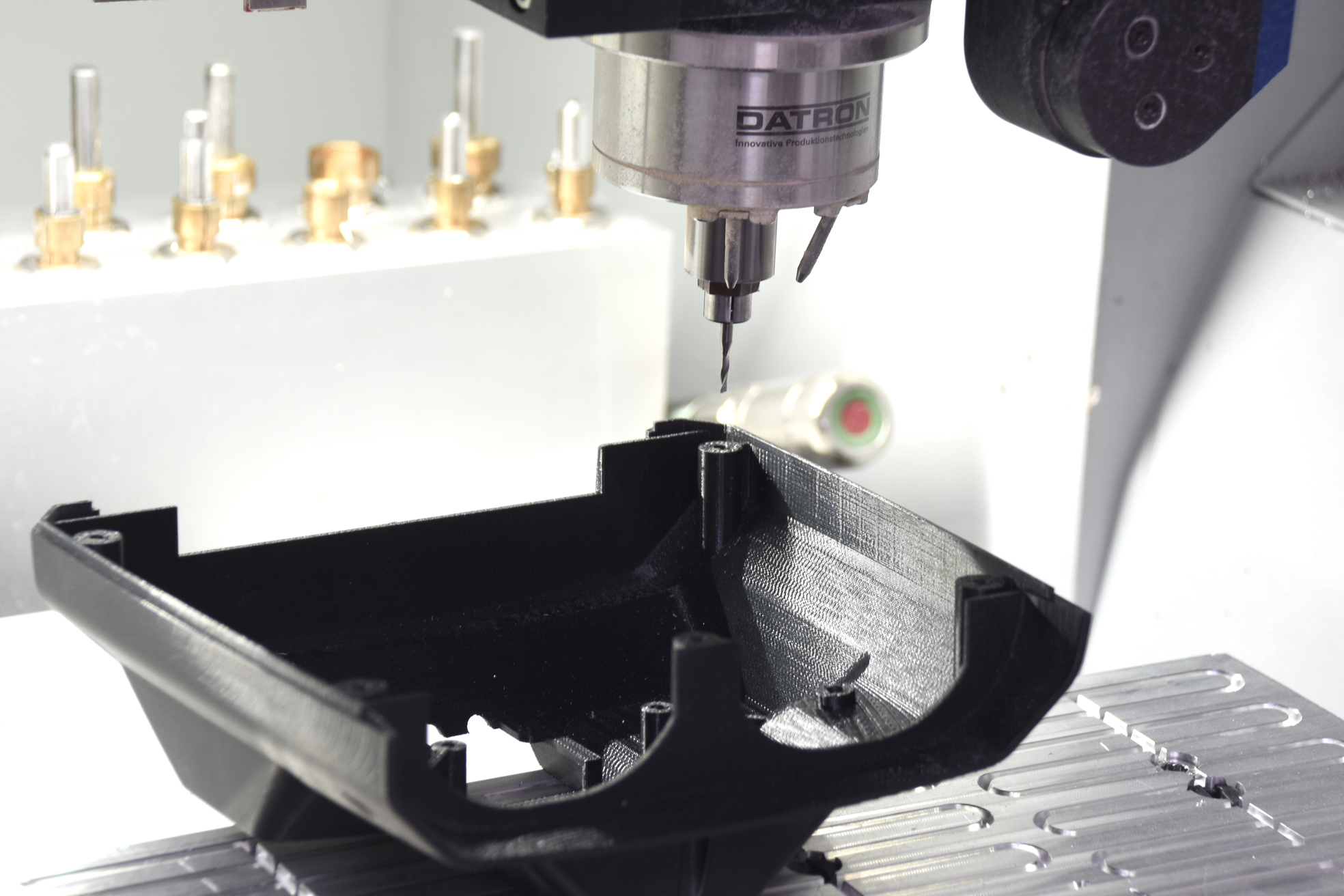
Rapid prototyping means producing physical models or functional parts directly from CAD data, quickly enough to test and iterate within a single product development cycle. Professional 3D printing is the most common technology for this because it eliminates tooling, removes setup costs, and can produce parts in genuine engineering materials within days.
The key difference between professional rapid prototyping and desktop 3D printing is materials and accuracy. A desktop printer produces parts in PLA — fine for checking rough dimensions, but useless for functional testing. A professional FDM service using Stratasys machines prints in ABS, polycarbonate, nylon, ULTEM, and carbon fibre composites — the same polymer families used in injection moulding. That means the prototype behaves like the production part when you test it.
How Much Time Does 3D Printing Actually Save?
The time savings are significant. Here’s how a typical prototyping timeline compares across the most common methods:
| Prototyping Method | Typical Lead Time | Tooling Required? | Design Changes |
| Professional FDM 3D Printing | 3–5 working days | None | New file, reprint |
| CNC Machining | 2–4 weeks | Fixtures may be needed | New setup required |
| Soft Tooling / Silicone Moulding | 3–6 weeks | Mould tool required | New mould required |
| Injection Mould Prototype Tool | 6–12 weeks | Steel/aluminium tool | Tool modification or rework |
The difference isn’t just speed — it’s the ability to iterate. If a design engineer tests a 3D printed prototype on Monday and finds a problem, they can modify the CAD, reprint, and have a revised part by Wednesday. Try doing that with a machined prototype or a moulded part.
Over the course of a typical product development programme, this can compress the prototyping phase from months to weeks. For manufacturers working to tight launch deadlines or responding to client briefs, that’s a genuine competitive advantage.
How Midlands Manufacturers Are Using Rapid Prototyping
The East Midlands manufacturing base is diverse, and the applications for rapid prototyping reflect that. Here are the most common ways we see manufacturers across the region using professional 3D printing:
Design Verification and Fit Checks
Before committing to tooling, engineers need to physically check that parts fit together, interfaces align, and the overall form is right. 3D printed prototypes let you do this at a fraction of the cost of machined samples. For multi-part assemblies, you can print all the components and test the full assembly in one go.
Functional Testing in Real Materials
This is where professional 3D printing earns its keep. Because the parts are printed in engineering-grade thermoplastics — ABS, polycarbonate, nylon, carbon fibre composites — you can run meaningful mechanical, thermal, and environmental tests. The results give you confidence that the design will perform when it reaches production.
Client Presentations and Stakeholder Sign-Off
A physical prototype communicates design intent far more effectively than a CAD render on a screen. For manufacturers presenting to clients, investors, or internal stakeholders, a well-finished 3D printed prototype can accelerate sign-off and keep the project moving. Our secondary processing — sanding, filling, painting, assembly — means prototypes can look and feel like finished products.
Production Line Tooling
Beyond prototyping, many Midlands manufacturers are now 3D printing custom jigs, fixtures, and assembly aids for their production lines. These are quick to produce, easy to iterate, and can be designed around the specific task rather than compromising with off-the-shelf solutions. A fixture that would take weeks to machine can be printed in days.
Bridge Production
For products nearing launch, 3D printing can produce the first batch of parts for early customers or field testing while injection mould tooling is being made. This bridges the gap between prototype and production, gets the product into real-world use sooner, and generates early feedback that can inform the final design.
Why a Local Prototyping Partner Matters
You can send files to a 3D printing bureau anywhere in the country. So why does it matter that your prototyping partner is local?
- Faster turnaround. No courier delays. For urgent projects, you can collect parts the same day or the following morning. When you’re in the same city, the logistics are simpler.
- Face-to-face discussion. Some projects need a conversation, not just a file upload. Discussing material selection, build orientation, and design-for-print considerations is easier in person — or at least over the phone with someone who knows the local manufacturing landscape.
- Understanding of the local supply chain. A Midlands-based 3D printing service understands the industries in the region — automotive, aerospace, medical devices, industrial equipment. That context matters when advising on materials and applications.
- Accountability and relationship. Working with a local partner means you can build a proper working relationship. When you need something urgently, it helps to be talking to people who know your business and your products.
Pro 3D Print is based at 19 St Margaret’s Street in Leicester city centre, right in the heart of the East Midlands manufacturing corridor. We work with design consultancies, contract manufacturers, OEMs, and product developers across Leicestershire, Nottinghamshire, Derbyshire, and the wider Midlands region.
What the Rapid Prototyping Process Looks Like
If you haven’t used a professional 3D printing service for prototyping before, here’s what to expect:
- Send your CAD files. STL or STEP format works best. If you don’t have a print-ready file, we offer CAD modelling support to get you there.
- Material and build discussion. We review your files and discuss the application. What’s the prototype for? What does it need to withstand? This determines material choice, build orientation, and resolution.
- Quote and confirmation. We provide a clear, itemised quote. No hidden costs.
- Printing. Your part is built on our Stratasys industrial FDM machines. Depending on size and complexity, this takes a few hours to a couple of days.
- Post-processing. Supports are removed (soluble supports for clean internal features), surfaces are finished, and any assembly or coatings are applied.
- Delivery or collection. Parts are quality-checked and either shipped or available for collection from our Leicester workshop. Standard turnaround is 3–5 working days.
Sectors We Support Across the Midlands
The East Midlands is home to manufacturers across a wide range of sectors, and rapid prototyping serves all of them:
- Industrial and engineering: Sensor housings, control enclosures, mounting brackets, tooling, jigs and fixtures. The bread and butter of Midlands manufacturing.
- Medical devices: Prototyping in biocompatible materials (ABS-M30i) for surgical tools, diagnostic equipment, and patient-facing devices.
- Automotive: Interior trim, under-bonnet components, connector housings, and clip prototyping. The region’s automotive heritage means there’s strong demand.
- Aerospace: High-temperature components in ULTEM for ducting, brackets, and interior parts. FST-certified materials for cabin applications.
- Consumer products: Housings, grips, buttons, and full-assembly prototypes for user testing and design validation.
Getting Started with Rapid Prototyping
If you’re a manufacturer in the Midlands looking to speed up your product development, reduce prototyping costs, or get better-quality prototypes, here’s what to do:
- Got CAD files ready? Send them over and we’ll come back with a material recommendation and quote. No commitment.
- Not sure about the right approach? Give us a call. We’re happy to discuss your project and advise on materials, methods, and what’s achievable within your timeline and budget.
- Want to understand costs first? Our pricing guide gives you realistic ranges for common project types.
➤ Request a quote | Call us on 0116 262 5737 | Email info@pro3dprint.co.uk